


ABLE Village
Artful Aging: A digital village for older adults to enhance social connectivity
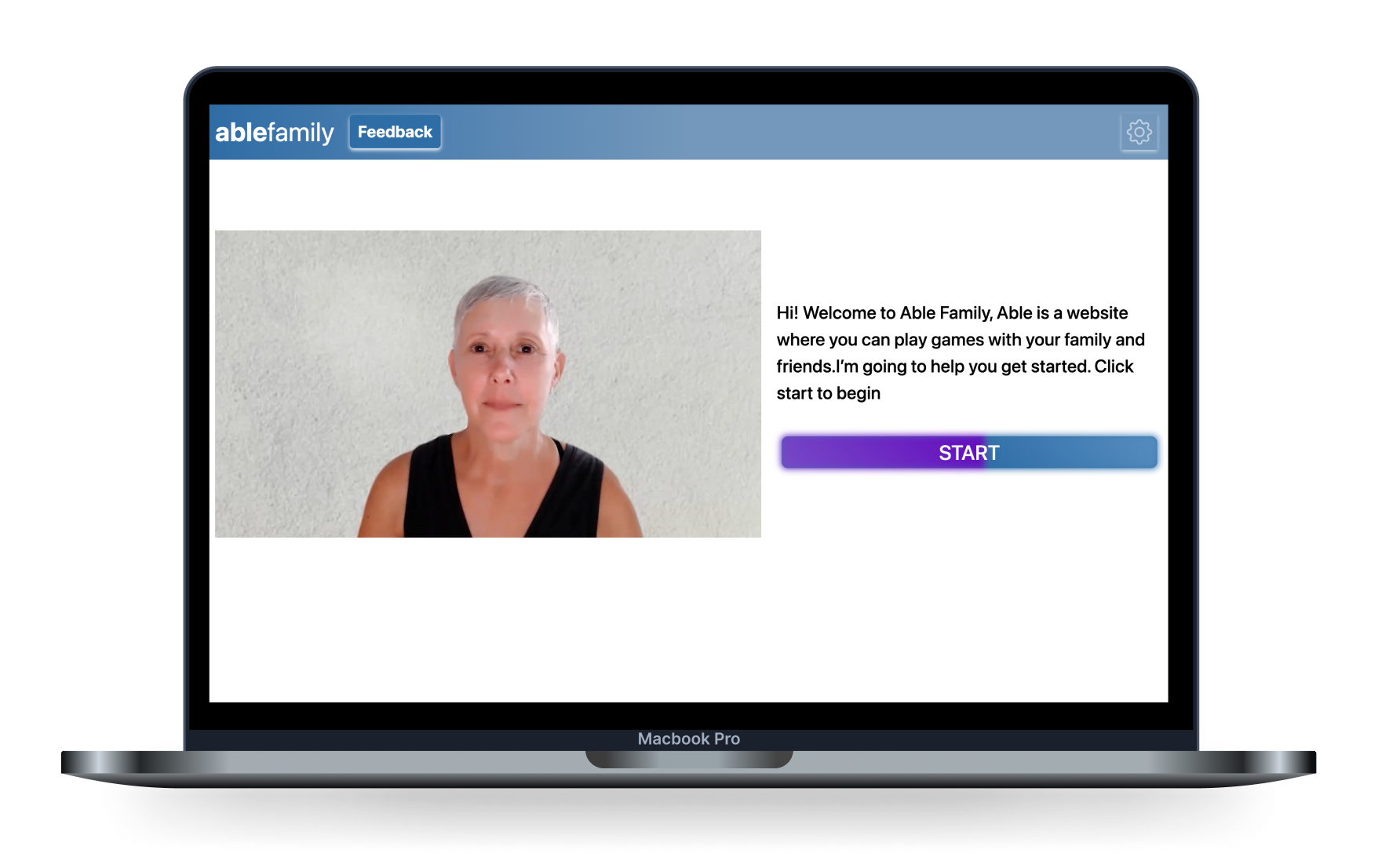
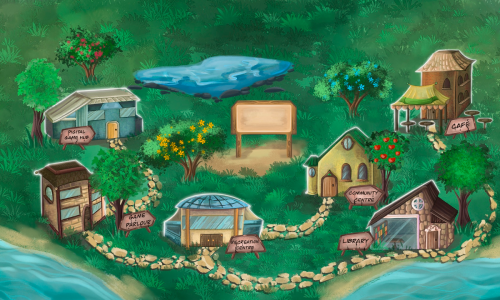
Our diverse team of community organizations participants and academic researchers will co-create ABLE Village through its ArtPlay experiences –art/craft, movement, etc activities–and digital toolkits, offering interaction, creativity and learning opportunities through the active involvement and participation of older adults. Our approach is “walks the talk”– creating a Village that values older adults’ ingenuity and diversity, and a method that fully integrates older adults in technology design, and values them as vital community members.
This project has been approved by the McMaster University Research Ethics Board (#6511).
Project Organisation
Innovation and Research from Coast to Coast
Hamilton Node – Lead Node
Introduction
The idea behind ABLE Village is to celebrate old age by staying active, playful and connected. Dr. Gardner and her team have developed a virtual platform (https://www.ableplatform.ca/) that allows older people to connect, play games, make art, and engage in movement activities with others, including family members in different locations, through computer video at the same time (or “live”). Our team greatly embrace and value the idea around co-creation and co-design with older adults. Hence, we would provide training for older people on how to use the ABLE Village platform; in turn, we would like feedback from older people on the design and the interaction (or “game design”) of this platform and the social, physical, mental, and artistic activities included on the platform.
Collaboration


Team Members
Dr. Paula Gardner – Project Lead, Professor – Communication Studies and Media Arts and Asper Chair in Communication, McMaster University, gardnerp@mcmaster.ca
Andrew Mitchell – Website engineer – Computer Science, McMaster University, mitchaj2@mcmaster.ca
Abhay Chopra – UX Designer – Engineering, McMaster University, chopra38@mcmaster.ca
Taisiia Petrovska – Graphic designer – Media Arts, Faculty of Humanities, petrovst@mcmaster.ca
Stephen Sulin – Researcher – Communication Studies and Media Arts, McMaster University, surlins@mcmaster.ca
Mairead Stewart (they/them) – Research Assistant – Communication Studies and Media Arts, McMaster University, maireads587@gmail.com
Montreal Node
Introduction
At Concordia, the Montreal Node is investigating how technology can strengthen intergenerational connections and support healthy aging. Working with the ACT (Ageing + Communication + Technologies) Lab, the team emphasizes co-creation with older adults to design activities that are meaningful, playful, and socially engaging.
Collaboration


Team Members
Dr. Celine Latulipe (She/Her) – Professor of Department of Computer Science, University of Manitoba, Celine.Latulipe@umanitoba.ca
Melika Adabinejad (She/Her) – Master’s Student, Department of Computer Science, University of Manitoba, adabinem@myumanitoba.ca
Cape Breton Node
Introduction
An initiative to host live, interactive exercise sessions through the ABLE platform, creating viewing-party style gatherings at rural senior centres in partnership with the Institute for Community, Sport and Health.
Team Members
Kelsey Harvey, Kelsey_Harvey@cbu.ca
Halifax Node
Introduction
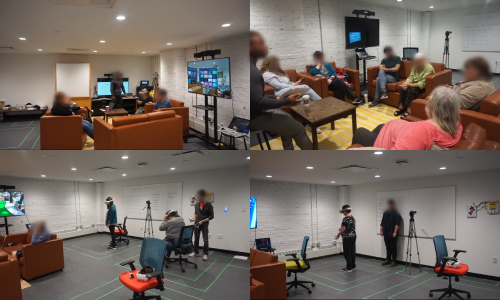
Through a series of workshops, the Dalhousie Node of the Able Village Project aims to elicit design guidelines for building an experience that supports physical, social, artistic, and mental engagement for seniors. In the various workshops, we explore several VR games (Beat Saber, Eleven Table Tennis, Walkabout Minigolf, First Steps), focusing on the different comfortable interaction modalities for older adults. During the workshop, we present the user population with the chosen VR game of the day, and after short exposure, we get their first impression of the game. Furthermore, we expose them to more VR interaction for longer to get a feel for the application. Finally, we have a detailed focus group where we talk about the interaction styles, learning curve, game elements, and what was fun and enjoyable amongst others for the participants.
Collaboration

Team Members
Rowland Goddy-Worlu, Rowland.Goddy-Worlu@dal.ca
Yeaminur Rahman, Yeaminur.rahman@dal.ca
Nirmal Adhikari, n.adhikari@dal.ca
Mantans Poderys, mn903645@dal.ca
Precious Amadi-George, Precious.Amadi-george@msvu.ca
Winnipeg Node
Introduction
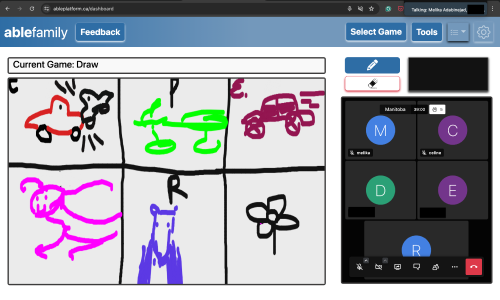
The ABLE Village is a research project to expand and improve ABLE platform to provide tailored technology solutions designed to meet older adults’ (OAs) needs and preferences using participatory design. The project involves interdisciplinary collaboration among multiple universities, each focusing on developing specific games or activities that will run on the platform. At the University of Manitoba, we are responsible for developing an art-play activity named “SoundBrush”. In SoundBrush, users will be able to make arbitrary sounds into their microphones, which the application will translate into visual representations displayed on a canvas. Through this research, we aim to explore how OAs prefer to engage with sound as an input modality to produce online visual art.
Collaboration


Team Members
Dr. Celine Latulipe (She/Her) – Professor of Department of Computer Science, University of Manitoba, Celine.Latulipe@umanitoba.ca
Melika Adabinejad (She/Her) – Master’s Student, Department of Computer Science, University of Manitoba, adabinem@myumanitoba.ca
Fredericton Node
Introduction
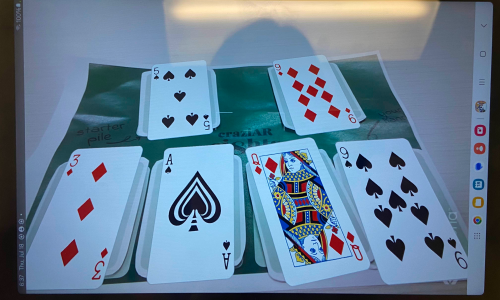
AR Cards aims to connect players across all ages to stay connected and facilitate playful interactions.The game connects distant friends, relatives, and loved ones through a mobile game of cards enhanced with augmented reality game pieces. The augmented reality game pieces can be printed out and used as tangible pieces for the application, allowing players to share the same deck of cards across any distance. We value ageless connections and prioritise a simple and intuitive interface that can connect players of any age through the shared tradition of card games.
Collaboration

Team Members
Dr. Scott Bateman – Associate Professor – SPECTRAL Spatial Computing Research Centre, UNB, scottb@unb.ca
Taylor Short – Graduate Student – SPECTRAL Spatial Computing Research Centre, UNB, tshort1@unb.ca
Dr. Rose McCloskey – Professor – Department of Nursing & Health Sciences, UNB, rmcclosk@unbsj.ca
Danielle Kent – Director of Research – Loch Lomond Villa, Dkent@LochLomondVilla.com
ABLE Village is supported in part by funding from the Social Sciences and Humanities Research Council

ABLE Village is also supported by the following organizations:



Latest from ABLE Village
Concordia University - Fourth Space ➚
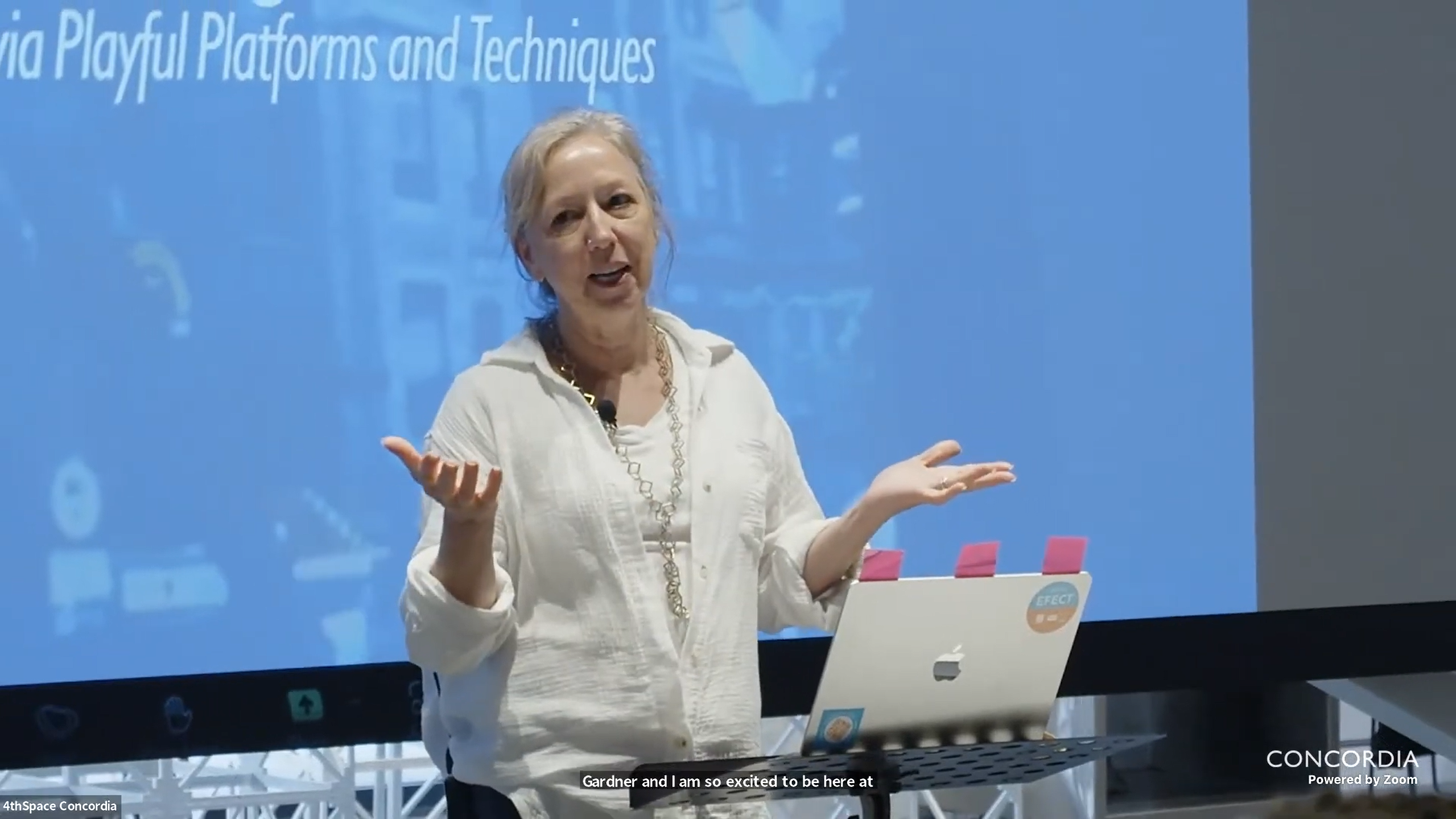
Dr. Paula Gardner: Disrupting Ageism in Design via Playful Platforms and Techniques - B/OLD Events May 2024
# Events and Activities